
App Tags: Apple’s Update Changing the App Store
With iOS 26, Apple rolled out App Tags in the U.S. App Store. While most people see them as simple labels, they’re actually much more powerful.

Over the summer, Apple gave App Store pages a new data point: App Tags.
They’re short, Apple-generated labels that appear on app listings in iOS 26, designed to describe what an app does and help users explore related content.
Tags are created automatically using a mix of metadata, AI signals, and editorial curation.
Developers can’t add custom tags, but they can manage which ones appear.
For ASO, this unlocks a new layer of visibility, as tags help Apple classify apps more precisely, refine search intent, and enable new ways to browse and filter content across the Store.
As always, I took some time to look deeper into it, trying to figure out how it’s changing ASO strategies and what it means for discoverability.
Here’s what I found.
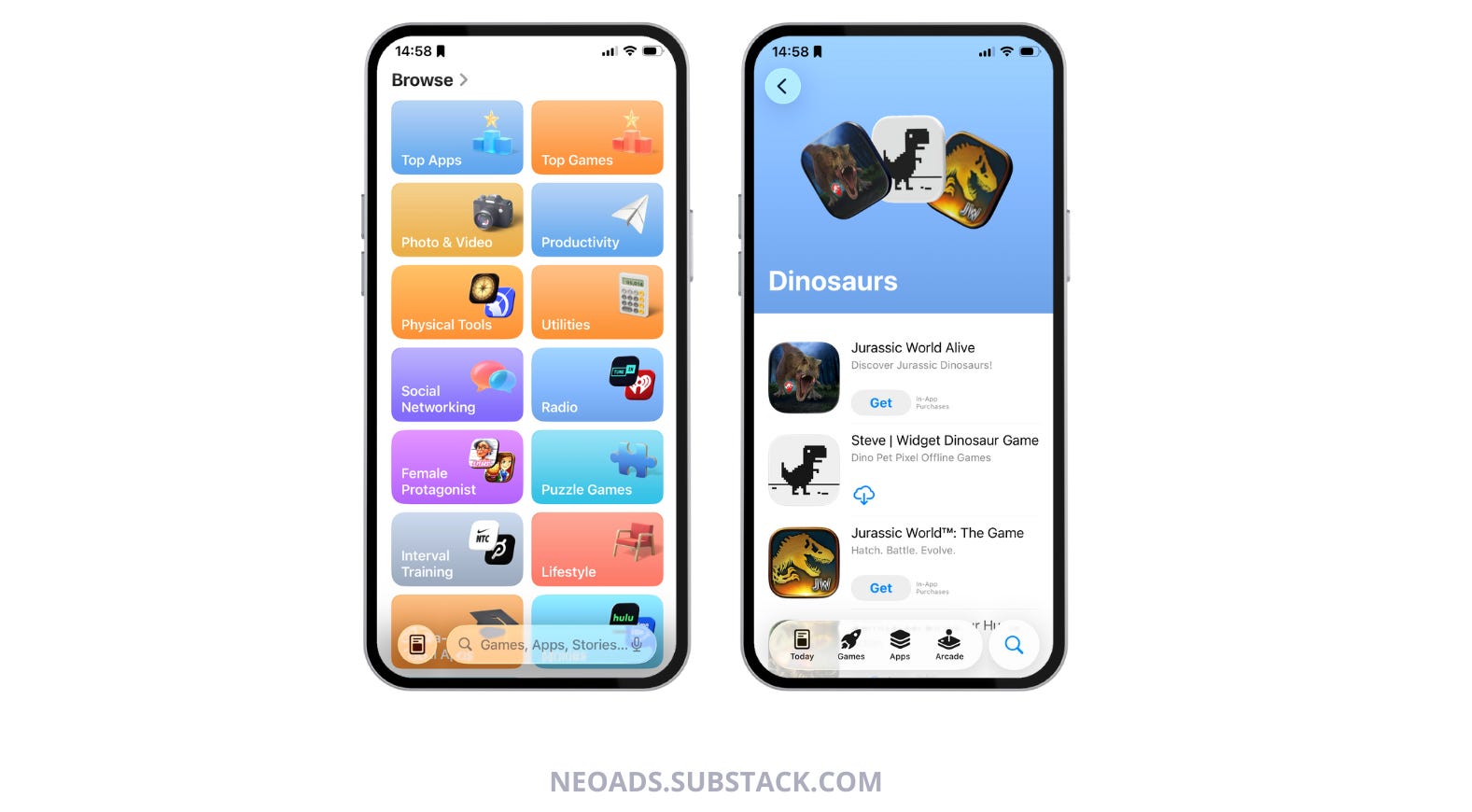
1. Tags influence ranking and visibility
When comparing keyword rankings before / after App Tags were introduced, I noticed an interesting pattern.
One of the apps I manage in the Sports Games category started ranking for “multiplayer” keywords when App Tags were first introduced in beta on June 14th.
At that time, we did not make any changes to the App Store page, & the word doesn’t appear anywhere in title, subtitle, or keyword fields.
In total, the app started ranking on 70 new long-tail “multiplayer” keywords.
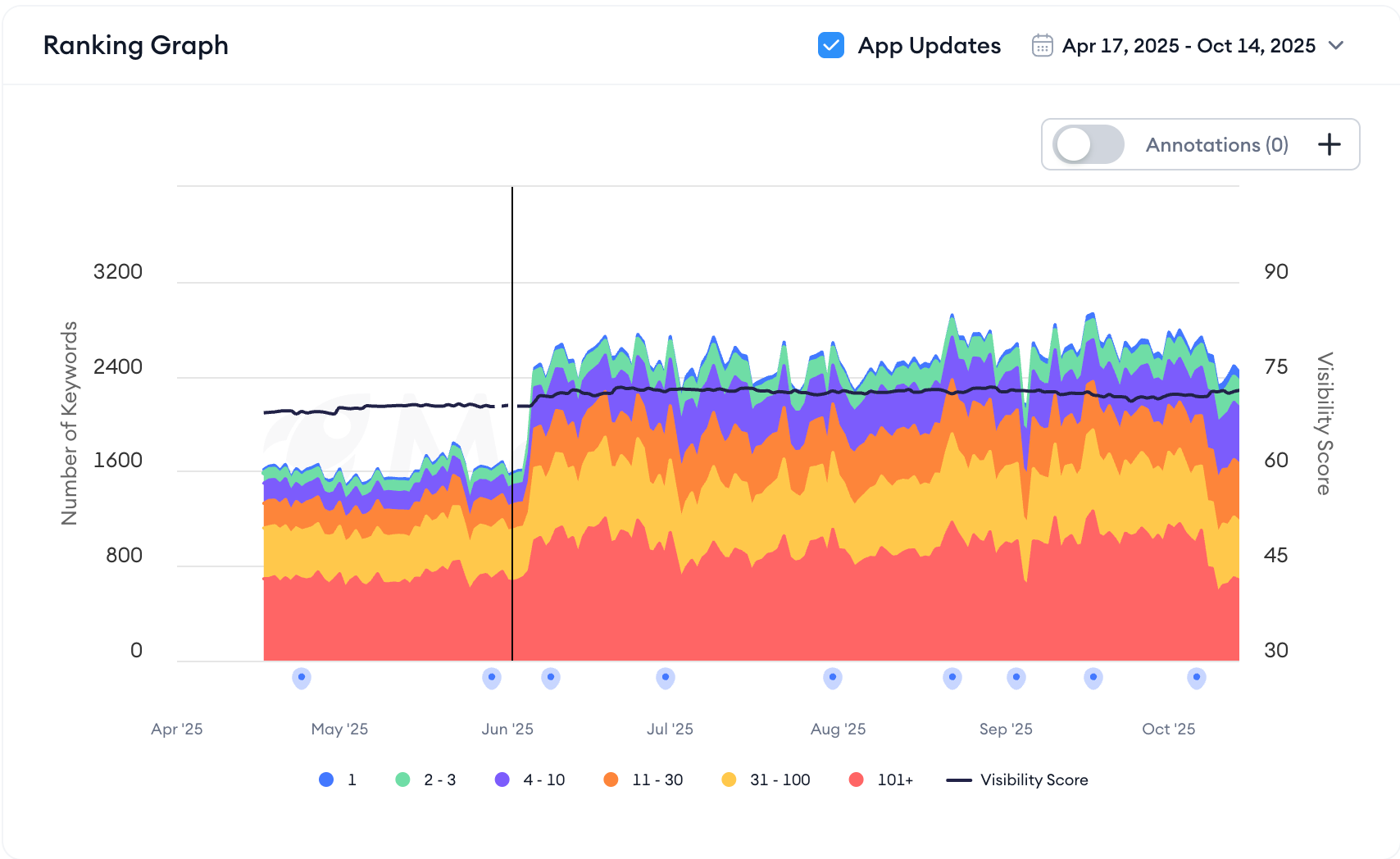
That’s a strong signal that Apple’s algorithm is now connecting tags with search relevance, even when those terms aren’t explicitly present in metadata.
In other words, tags act as semantic ranking cues, helping the system understand what an app is about, not just what it says it’s about.
2. Tags reorder dynamically
While digging deeper, I noticed something even more interesting: tags aren’t static. They reorder dynamically based on the user’s query, adapting to intent.
As shown on the screenshots below:
When users search for “sports game”, the tags appearing for EA SPORTS FC Mobile Soccer are “Soccer”, “Sports Simulation” & “Tournament”.
When searching for “multiplayer sports games”, the tag “Multiplayer” suddenly appears first, followed by “Sports Simulation”.
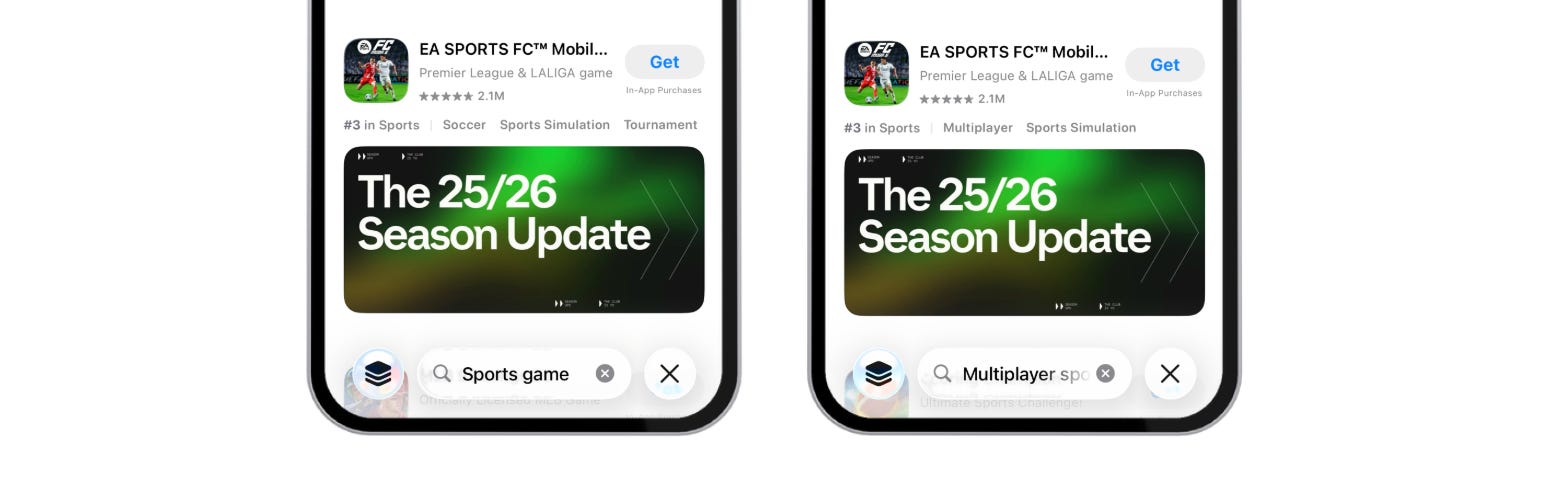
This dynamic rearrangement suggests that Apple is optimizing results around relevance and intent-matching, not just metadata.
And that could have a subtle but meaningful effect on conversion rate, since users instantly see that an app aligns with their search context.
3. Tags define your competitive arena
Tags don’t just improve categorization, they also redefine competition.
When you tap on a tag, landing pages behave differently:
The Sports tag opens curated editorial collections (“Essential Sports Apps,” “Top Sports Games,” etc.).
The Multiplayer, PvP, Leaderboard, or Sports Simulation tags link to lists of all apps with those tags, across genres.
But here’s the catch: your app might not even appear on that tag’s landing page.
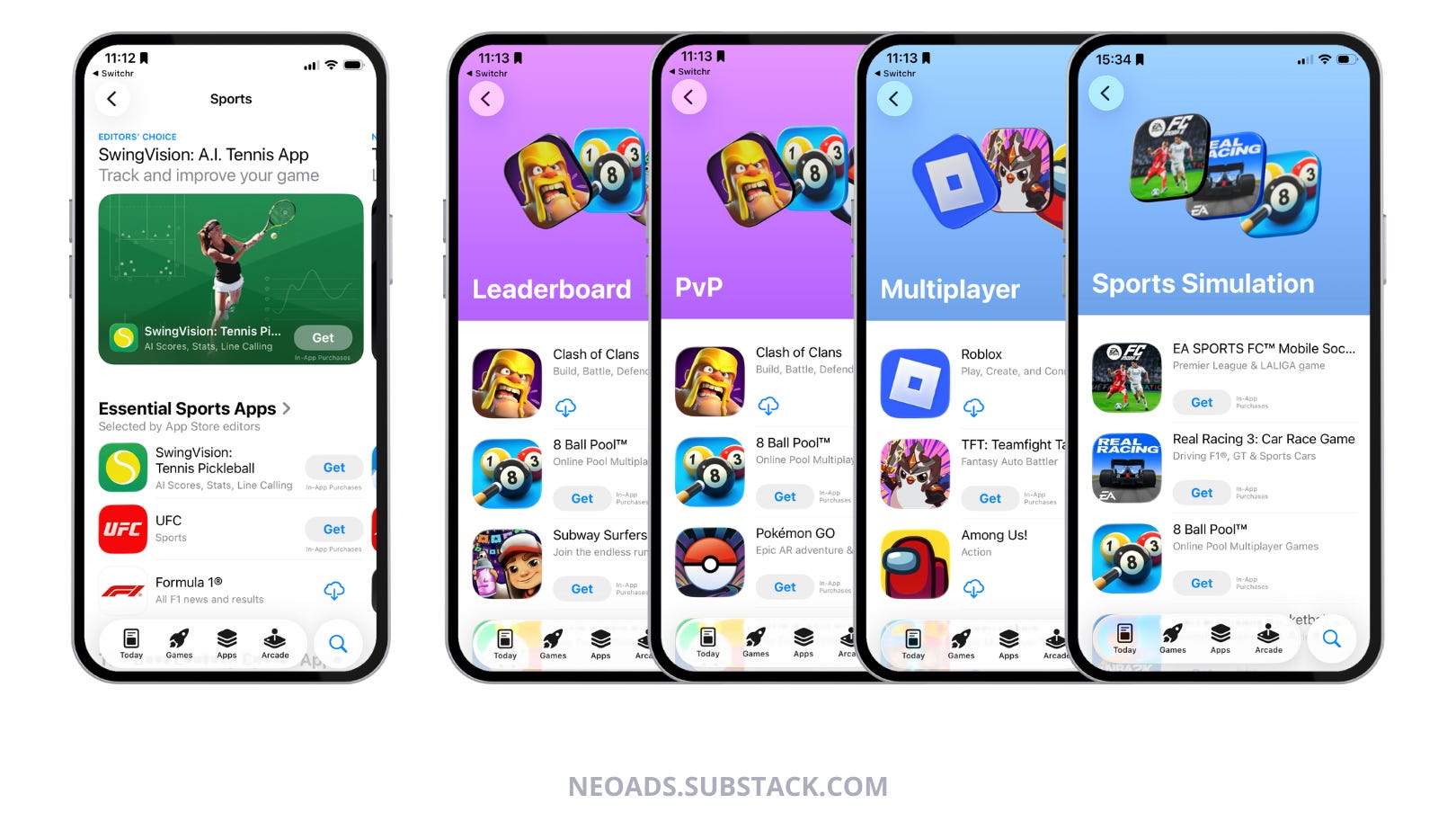
As Talha Mumtaz pointed out, tags can even redirect traffic if your app is placed in a shared collection alongside stronger competitors.
So while tags can boost discoverability, they can also reshape your competitive landscape.
🔍 The bigger shift: from keywords to intent
It’s becoming even more obvious everyday that Apple’s semantic search engine now prioritizes user intent over exact keyword matching (great breakdown of this on Mobile Action blog).
From an ASO perspective, this means a shift toward natural phrasing and semantic strength. We’ve officially entered Apple’s context-driven search era.
💡 What ASO teams should do next
Don’t ignore tags as they already influence visibility and relevance, and make sure they align with your app.
Monitor them regularly, and check what other apps appears in the list.
Reflect them in your description and / or screenshots with CPPs for ASO.
Avoid redundancy. If a tag covers “Multiplayer,” you might not need it in the keyword field too.
Note: tags only appear in contextual searches (e.g. “sports games”) and not in broad ones (“sports”).
🎯 In case your missed it:
Gemini vs ChatGPT vs Sora: The AI Race Has Moved to the App Store

On September 13, Google Gemini climbed to #1 on the US App Store, holding the spot for 3 weeks straight, following the launch of their AI Image Generator, Nano Banana.
✨ Want to stay ahead in Ad Tech for Mobile Apps & Games?
Subscribe now & get the latest trends delivered straight to your inbox!